• Skip to primary navigation
  • Skip to main content
K Brown Auto Repairs

K Brown Auto Repairs

Call 01553 763763 or 01485 533786

Book MOT
KING’S LYNN
01553 763763
HUNSTANTON
01485 533786
  • About Us
  • What we do
    • Servicing
    • MOT’S
    • Diagnostics
    • Tyres
    • 4-Wheel Alignment
    • Air Conditioning
    • Repairs
    • Electric Cars
    • Free Summer Health Check
  • Blog
  • Testimonials
  • Careers
  • Contact Us

Abigail

3 Steps to Check Your Tyres Like a Pro

November 10, 2021

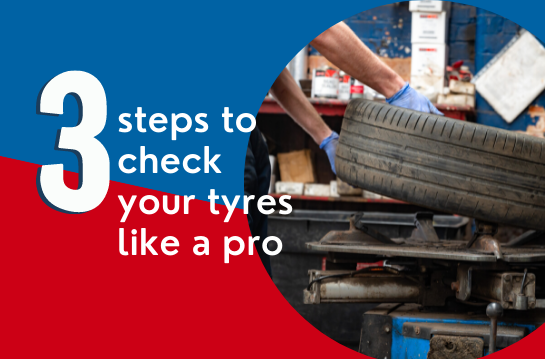
3 steps to check your tyres like a pro

Your tyres are the only contact your car has with the road, so it’s crucial that you take care of them.

The legal tyre tread depth in the UK and Europe is 1.6mm across the central three-quarters of the tyre, however, most recommend a minimum tread depth of 3mm for optimal safety.

If your tyres don’t meet this requirement, not only does this pose a safety risk, but you could also receive a fine of £2,500 and three penalty points on your licence.

The quickest and easiest way to make sure your tyres are road-worthy is by conducting your own checks: 

  1.  First, consider your tyre pressure.
    You should be able to tell if they are flatter than normal simply by taking a closer look – in this case, you will need to get them inflated at a nearby petrol station or garage.
  2. Now onto tread depth.
    Take a 20p coin and insert it into the tread grooves on one of your tyres. If you can’t see the outer band on the coin, your tyres are above the legal limit, and you’re good to go. On the other hand, if the band of the coin is still visible, your tyres could be unsafe and you will need to get them inspected by a local garage.
     
  3. Complete this step for every tyre.
    (It is wise to check your spare tyre at the same time).
    NOTE: make sure to check the inner and outer tread of the tyre. You can do this by turning the wheel left to right. 

It is recommended that drivers carry out the above test every two weeks or so and before long journeys.

If you’re unsure whether your tyres are safe or not, or if you’re having trouble checking them yourself, it’s always best to pop into your local garage and ask for help, rather than dismissing the risk. The only way to be 100% sure your tyres are safe is to inspect them on a ramp, just in case the inner wall is damaged. 

We offer a free tyre health check, where we can identify any problems and explain the work required to repair it and any costs. We can also supply and fit tyres of all sizes and brands on cars and vans.

Call us in Hunstanton on 01485 533786 or King’s Lynn on 10553 763763 to book your free tyre health check. We also offer 4-wheel alignment at our King’s Lynn garage.

More About Our Tyre Services
About Us

Petrol panic – what to do if you put the wrong fuel in your car

November 6, 2021

Petrol panic - what to do if you put the wrong fuel in your car

Taking insipiration from recent events, we thought it fitting to place a focus on petrol. Although we’re now past the panic now, we can shed some light on another issue associated with fuel – putting the wrong one in your car. 

Petrol shortage scare or not, every three and a half minutes someone in the UK puts the wrong fuel in their car. It’s one of those things that “won’t happen to you”…until it does. Here’s what to do if you get unlucky.  

You’ve put petrol in a diesel car – now what?

This is common, since the nozzle fits easily into the diesel car’s fuel tank so don’t beat yourself up first and foremost! What’s most important is that you DON’T start the engine. This will enable the fuel to move around the engine, kick-starting a whole load of damage. You will need to get your fuel tank drained of all the petrol before you even think about driving. Breakdown providers like AA and RAC can help with this.

You’ve put diesel in a petrol car – now what?

Most diesel fuel pumps won’t fit into a petrol filler neck, however, this isn’t always the case, so mistakes can be made. The same rule applies here – whatever you do, don’t start the engine. Instead, wait until the contaminated fuel is flushed out by a professional.

Putting diesel in a petrol car is less damaging than the other, more common, way around. This is because it’s of a different consistency to petrol; it’s harder to ignite in the engine of a petrol car. For this reason, the engine may not even start if this is attempted. But, it’s not worth taking the risk. If you know you have pumped the wrong fuel into your vehicle the most sensible thing to do is stay put until the problem is resolved. 

How to prevent misfuelling

  • Double-check the hose or nozzle you are about to use. The colour may elude to the right fuel but it’s best to look for more clues to back that up.
  • Read the pump’s trigger label properly. 
  • Put reminders in your car. A sticker inside the fuel cap or on the inside of the driver’s side door will do. 
  • Don’t be distracted when filling up. Concentrate on the task at hand. 
  • Remember, if you’re stressed, or in a hurry, you’re more likely to make a mistake, so take extra care.
  • If you have a diesel car, buy a stopper for the filler neck so the narrower petrol nozzle doesn’t fit.

To learn more about us or for help with anything vehicle-related contact our friendly reception team.

About us
Contact Us

How To Find a Good Garage

September 30, 2021

How to find a good garage

Finding a trustworthy garage is vital. While a bad experience at a restaurant is disappointing, a bad experience at a garage could not only burn an unnecessary hole in your pocket, but leave you with a car that’s even less roadworthy than before.

Here’s some advice that may help you avoid the trial and error process and find a garage you can rely on:

Ask your family and friends for recommendations

Reach out to people close to you who live in the same area for their opinions. Which garage do they currently use, and would they recommend them? Make sure to ask questions about what is most important to you. For example, if you find visiting a garage a nerve-wracking experience, question the environment of the garage your friend/family member recommends, and ask how they usually treat their customers.

Do your research

A website can provide initial insight into how a garage operates, particularly in terms of its professionalism. Look out for garages with informative websites; clearly listing their services and contact details. If the website has a blog, this can also help by giving you an idea of their expertise.

Read the reviews

Good online reviews are one of the best indicators of a credible business; however, you should take them with a pinch of salt as some may be fake! Take some time to read through the most recent reviews local garages have received as a quick way to compare your options.

If it seems too good to be true, it probably is!

If a garage is boasting that they are the cheapest in the area, or that they are offering free services, this may be a red flag and reason not to use them. As much as it’s important that the garage you choose is affordable and good value-for-money, garages that are offering services at a price well below the industry average should be approached with caution – there’s a reason they are that cheap!

Despite how much time you put into finding the best car garage for you, in the end, it’s a case of biting the bullet and giving one of them a chance. If you are ready to put your trust in a garage after following the above advice, you can be fairly confident you will be happy with the service you receive.


We are a local garage with over 25 years of experience. Learn more about us by continuing to browse our website, or contact us to speak to our friendly reception team.

About Us
Contact Us

Is it important to change your car’s oil? – K Brown Auto Repairs

August 26, 2021

IS IT IMPORTANT TO CHANGE YOUR CAR’S OIL?

Is it important to change your car's oil?

In short, yes; oil is incredibly important for keeping your car running safely and smoothly, but many often put this job at the bottom of their to-do list. It’s easily done – life just gets in the way. 

However, not changing your oil regularly comes with consequences:

Poor engine performance

Oil is considered the lifeblood of a vehicle, so it makes sense that regular oil maintenance would have an impact on engine performance. It keeps the inner workings of your car clean; dirt and debris that builds up and moves around with the oil is removed during an oil change, preventing it from affecting the engine. 

Oil is there to reduce friction in the engine; if it’s degraded, it does the opposite, meaning the engine has to work harder. Simply out, old and contaminated oil does not protect the engine as it should do. Good-quality, fresh oil in an engine improves its performance. It’s also worth noting that degraded oil can actually cause engine noise as well. 

The easiest way to understand what happens to your oil if left unserviced for too long is thinking about it as cooking oil. Imagine you’re heating oil in a pan on the hob – what happens if you cook it too hot for too long? It turns nasty and inedible, of course. A similar thing happens with engine oil if not seen to; go too long without getting it changed and it becomes ineffective and harmful to your car. 

Engine failure

In worst-case scenarios, avoiding an oil change could cost you your car. Ultimately, once oil becomes degraded, it no longer protects the engine. Running like this, the engine will eventually destroy itself and/or seize up.

Voided warranty

If your car is under warranty, you will have to adhere to manufacturer specifications, which should include instructions to change your oil regularly. You will also have to use specific oil.


How often should the oil be changed?

You can change your oil every 3,000 miles (as some people suggest, however, it’s always best to check and adhere to the service interval recommended by your vehicle manufacturer. In fact, lots of new cars have extended service intervals – but these must be adhered to rigidly. Both the climate you drive in and your driving style can impact the duration between oil changes.

Most cars have some sort of service indicator that will appear on the dashboard and it’s vital that this isn’t ignored – it has appeared for a reason!

In conclusion, although it can be a pain to book your car in for something that may seem insignificant on the face of it, the ramifications can be costly. It may be worth pushing getting your oil changed further up your to-do list after all!


Our technicians are able to access any manufacturer recommendations and service your car with the approved oil to ensure you keep your warranty, and car, intact. 

Contact us for more information or to book your oil change.

Contact Us

7 Summer Driving Hazards and How to Avoid Them

July 28, 2021

7 summer driving hazards and how to avoid them

Most driving hazards are associated with wintertime, but summer can bring a host of different risks. 

We’ve put together a list of the top summer driving hazards and some safety tips to help you dodge them.


What are the dangers to look out for when driving in summer?

  • Roadblocks, detours and, traffic jams
  • Motorcycles
  • Pedestrians
  • Holiday traffic
  • Drowsiness
  • Sun glare
  • Social events

Roadblocks, detours, and traffic jams

Most road works take place in the spring and summer months, and they can be a real nuisance to drivers, causing detours and delays.

⇒ TOP TIPS:

  • Plan your journey ahead of time and check for construction work. 
  • Avoid routes affected by road works if possible. 
  • Drive sensibly in work zones. 
  • Merge into the correct lane early when approaching a road closed for construction work. 

Motorcycles

There are undoubtedly more motorcyclists on the road in hot weather, which, in turn, increases the risk of motorcycle incidents. 

⇒ TOP TIPS:

  • Be careful when making turns – make sure to double-check your blind spots.

Pedestrians

As more and more people venture out to enjoy the sun, drivers need to be extra aware of what’s happening around them. 

⇒ TOP TIPS:

  • Double-check for pedestrians when turning.
  • Be mindful of pedestrian crossings and ensure you stop for people waiting to cross.

Holiday traffic

Now we have more freedom, many people are heading out for a summer holiday, and who can blame them! But, this increase in traffic can lead to a higher risk of incidents. 

⇒ TOP TIPS:

  • Avoid driving during bank holiday weekends.
  • Avoid driving at peak times, if possible.

Drowsiness

Failure to keep high temperatures under control due to ineffective air-conditioning can induce tiredness and lack of focus in drivers. 

⇒ TOP TIPS:

  • Stay hydrated. 
  • Check your car’s air-conditioning before a long journey. 
  • Get your air-con serviced regularly.

Sun glare

The glare from the sun can restrict your view and make it difficult to spot hazards and, ultimately, drive safely. 

⇒ TOP TIPS:

  • Always have sunglasses in the car in case you need them. 
  • When planning a car journey ahead of time, note what time of day you will be leaving and prepare accordingly.
  • Remember to use your car’s sun visor – consider purchasing an anti-glare visor extension if your standard one is ineffective.

Social events

Warmer weather encourages more social gatherings, many of which include alcohol consumption. Unfortunately, some people ignore the law and drive home drunk, making them dangerous to other drivers, nearby pedestrians, and cyclists. 

⇒ TOP TIPS:

  • Keep your distance from traffic ahead to avoid being involved in a collision should one occur.
  • Always wear your seatbelt.
  • Use extra caution at junctions and roundabouts.
  • Don’t drink and drive!

Get your car summer-ready

Book a free air-conditioning check or an air-con service from £68+VAT at our Hunstanton or King’s Lynn garage.

Contact Us
Air-conditioning services
  • « Go to Previous Page
  • Page 1
  • Interim pages omitted …
  • Page 3
  • Page 4
  • Page 5
  • Page 6
  • Page 7
  • Go to Next Page »

K Brown Auto Repairs

  • Facebook
  • Instagram
Auto Repairs
  • Privacy Policy
  • Website By Business Equip
We use cookies on our website to give you the most relevant experience by remembering your preferences and repeat visits. By clicking “Accept All”, you consent to the use of ALL the cookies. However, you may visit "Cookie Settings" to provide a controlled consent.
Cookie SettingsAccept All
Manage consent

Privacy Overview

This website uses cookies to improve your experience while you navigate through the website. Out of these, the cookies that are categorized as necessary are stored on your browser as they are essential for the working of basic functionalities of the website. We also use third-party cookies that help us analyze and understand how you use this website. These cookies will be stored in your browser only with your consent. You also have the option to opt-out of these cookies. But opting out of some of these cookies may affect your browsing experience.
Necessary
Always Enabled
Necessary cookies are absolutely essential for the website to function properly. These cookies ensure basic functionalities and security features of the website, anonymously.
CookieDurationDescription
cookielawinfo-checkbox-analytics11 monthsThis cookie is set by GDPR Cookie Consent plugin. The cookie is used to store the user consent for the cookies in the category "Analytics".
cookielawinfo-checkbox-functional11 monthsThe cookie is set by GDPR cookie consent to record the user consent for the cookies in the category "Functional".
cookielawinfo-checkbox-necessary11 monthsThis cookie is set by GDPR Cookie Consent plugin. The cookies is used to store the user consent for the cookies in the category "Necessary".
cookielawinfo-checkbox-others11 monthsThis cookie is set by GDPR Cookie Consent plugin. The cookie is used to store the user consent for the cookies in the category "Other.
cookielawinfo-checkbox-performance11 monthsThis cookie is set by GDPR Cookie Consent plugin. The cookie is used to store the user consent for the cookies in the category "Performance".
viewed_cookie_policy11 monthsThe cookie is set by the GDPR Cookie Consent plugin and is used to store whether or not user has consented to the use of cookies. It does not store any personal data.
Functional
Functional cookies help to perform certain functionalities like sharing the content of the website on social media platforms, collect feedbacks, and other third-party features.
Performance
Performance cookies are used to understand and analyze the key performance indexes of the website which helps in delivering a better user experience for the visitors.
Analytics
Analytical cookies are used to understand how visitors interact with the website. These cookies help provide information on metrics the number of visitors, bounce rate, traffic source, etc.
Advertisement
Advertisement cookies are used to provide visitors with relevant ads and marketing campaigns. These cookies track visitors across websites and collect information to provide customized ads.
Others
Other uncategorized cookies are those that are being analyzed and have not been classified into a category as yet.
SAVE & ACCEPT